Does fast charging damage your phone's battery?
Every lithium-ion battery wears out. Phone makers build fast charging around that fact, and what they warn owners about is heat and long hours at full charge.

What wears a battery out
Apple describes a battery's lifespan as a matter of its chemical age, which depends on more than the time since it was made: temperature history and charging pattern count too. As a lithium-ion battery chemically ages, the amount of charge it can hold falls.
Makers rate that wear in charge cycles. Apple counts one cycle each time you have discharged 100% of the battery's capacity, whether in one sitting or across several. Google says Pixel phones from the Pixel 8a onward should retain up to 80% of capacity for about 1,000 cycles, and Pixel 3 through Pixel 8 Pro and Pixel Fold for about 800.
What the research says about charging speed
A study of commercial smartphone cells published in Advanced Energy Materials in 2021 looked at an electrochemically optimized fast-charging algorithm. In cells fast-charged without an optimized algorithm, the researchers found a critical difference in the amount and form of lithium deposited on the anode, and identified those deposits as the main cause of capacity decay.
The study's finding is about how charging is controlled, not only how quickly it happens. It tested cells rather than finished phones, and its charge times were under two hours, so it cannot be read as a measure of any particular phone or charger.
How phones manage it
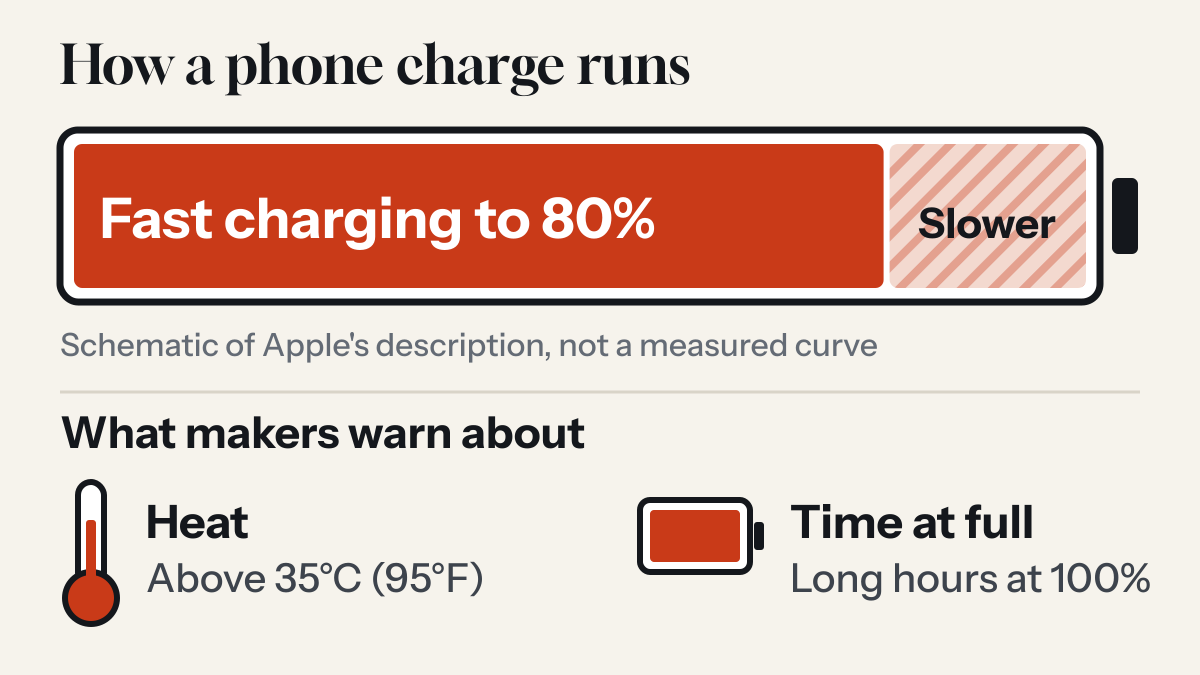
Fast charging does not run at full speed to the end. Apple says its lithium-ion batteries use fast charging to quickly reach 80% of capacity and then switch to slower trickle charging, and that this also extends the battery's lifespan. Its software may limit charging above 80% when recommended battery temperatures are exceeded.
Google describes similar measures. On Pixel 6a and later, Battery health assistance adjusts the battery's maximum voltage in stages from 200 charge cycles and tunes the phone's charging speed, and the phone can limit charging to about 70% to 80% in conditions such as continuous charging for more than a few hours at high temperatures.
Heat is the clear warning
On heat, the makers' language is plain. Apple says ambient temperatures above 35°C (95°F) can permanently damage battery capacity, and that charging in high ambient temperatures can damage it further. Google says heat can drain a Pixel's battery much faster, and recommends charging in a cool place of about 25°C (78°F).
Apple adds that charging inside certain styles of case may generate excess heat that affects battery capacity. If a phone gets hot while charging, it suggests taking the phone out of the case first.
| Apple | Google (Pixel) | |
|---|---|---|
| Temperature | Avoid ambient temperatures above 35°C (95°F) | Charge in a cool place, about 25°C (78°F) |
| Full charge | Optimized Battery Charging reduces time spent fully charged | Adaptive Charging, or an optional limit of 80% |
| Long storage | Charge to around 50% rather than full or empty | Not covered on the pages read |
What you can do
- Keep it cool while chargingAvoid hot places, and take the phone out of its case if it warms up on the charger.
- Use the built-in settingsLeave Optimized Battery Charging on with an iPhone, or use Adaptive Charging or the 80% limit on a Pixel, if you often leave the phone plugged in for hours.
- Use a charger the phone is meant forApple and Google both point to standard USB-C chargers. The guide to USB-C Power Delivery explains how they agree on power.
Common questions
Should I stop using a fast charger?
The Apple and Google battery pages listed in this guide do not tell owners to avoid fast charging. Their warnings concern heat and time spent at full charge, and both companies build in ways of slowing or limiting the charge.
Is it bad to keep my phone at 100%?
Apple says Optimized Battery Charging reduces wear by reducing the time an iPhone spends fully charged, and Google offers a limit of 80% on supported Pixel phones to extend battery life.
Sources
- About Charge Limit and Optimized Battery Charging on iPhone Apple Support
- Batteries: Why Lithium-ion? Apple
- Batteries: Maximizing Performance Apple
- Understand your Pixel battery Google Pixel Help
- Get the most life from your Pixel phone battery Google Pixel Help
- A Study of Model-Based Protective Fast-Charging and Associated Degradation in Commercial Smartphone Cells Besli et al., Advanced Energy Materials, 2021
Read next
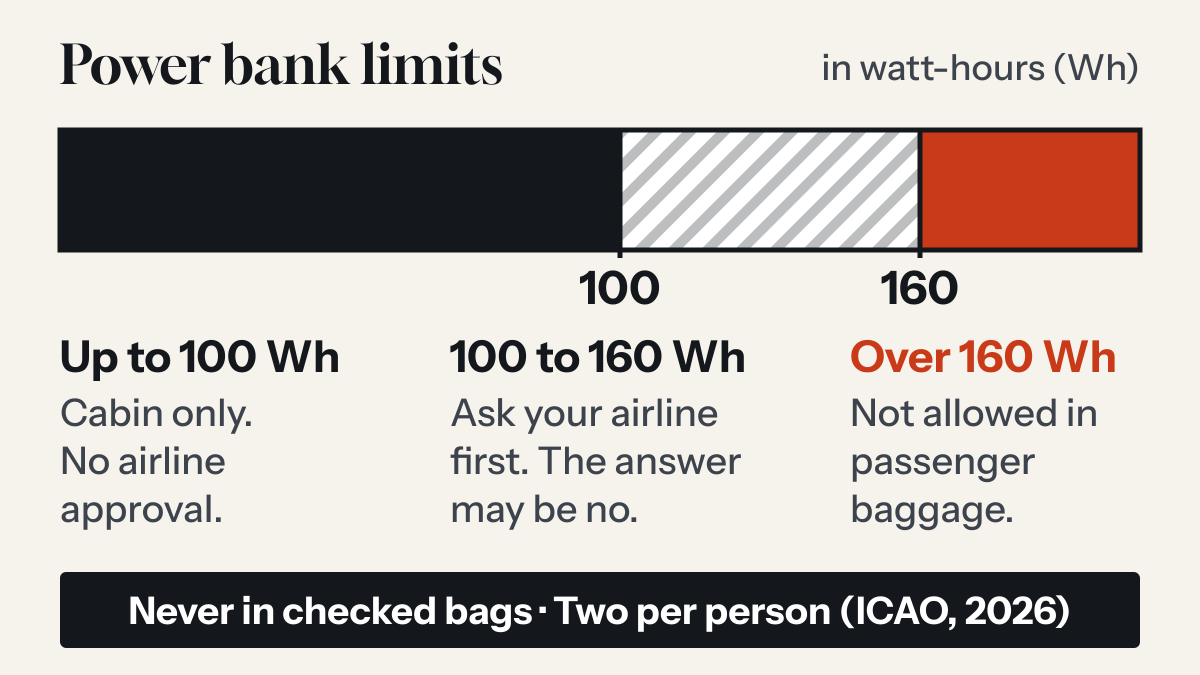
Can you take a power bank on a plane? The rules after the March 2026 change
Yes, in your carry-on and never in checked bags. International rules tightened in 2026: two per person, and no recharging the power bank on board.
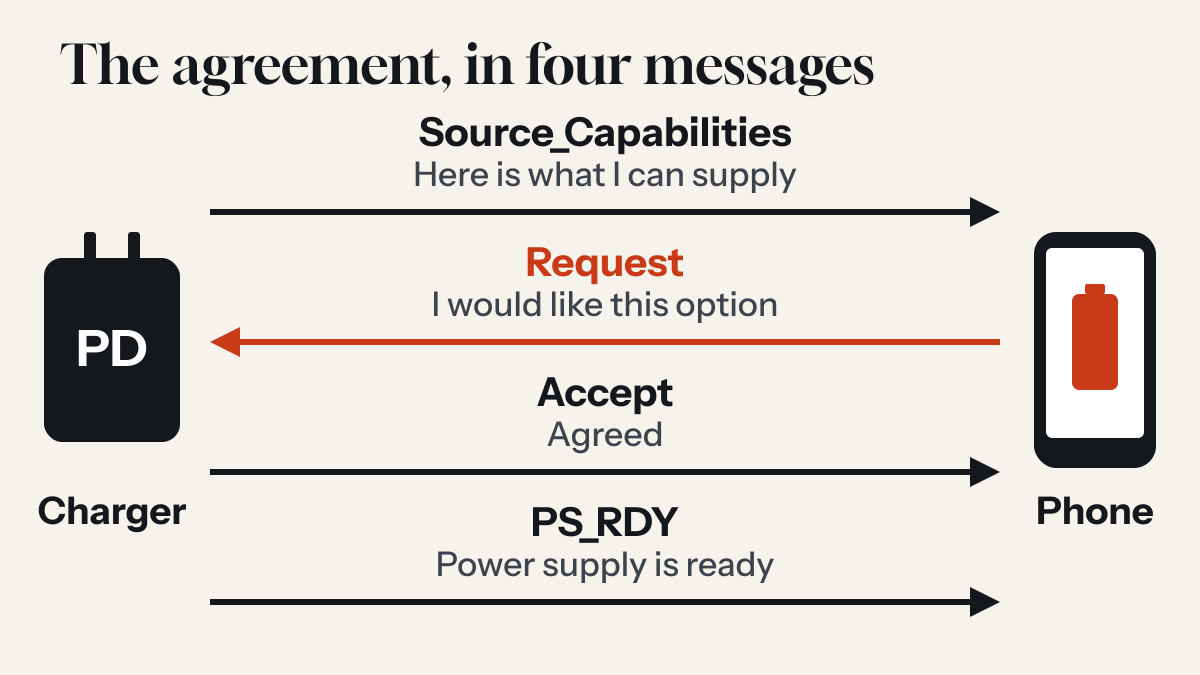
How USB-C Power Delivery works: the short conversation before your phone charges
A USB-C PD charger does not simply push power at your phone. It lists what it can supply, the phone asks for what it wants, and only then does the voltage change.
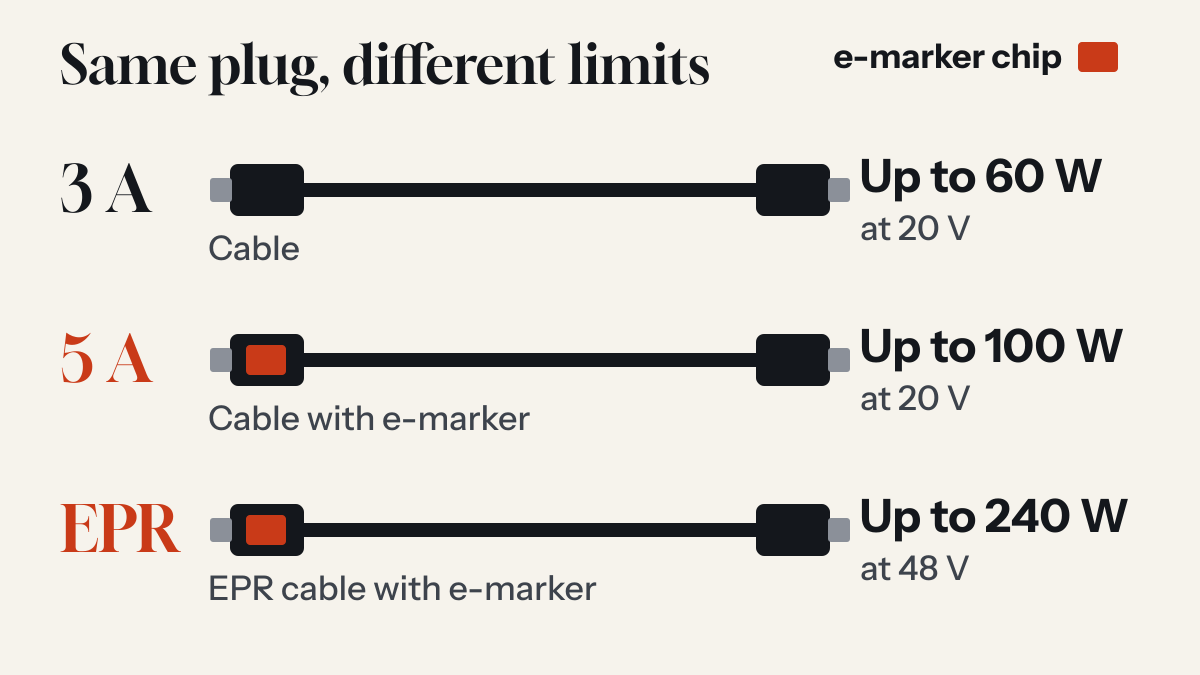
Are all USB-C cables the same? What the e-marker chip does
The plugs match. What the cable can carry does not, and some cables contain a small chip whose job is to say so.